Braille Class for Everyone? Inside the Schools Where Sighted Kids Are Learning the Dots
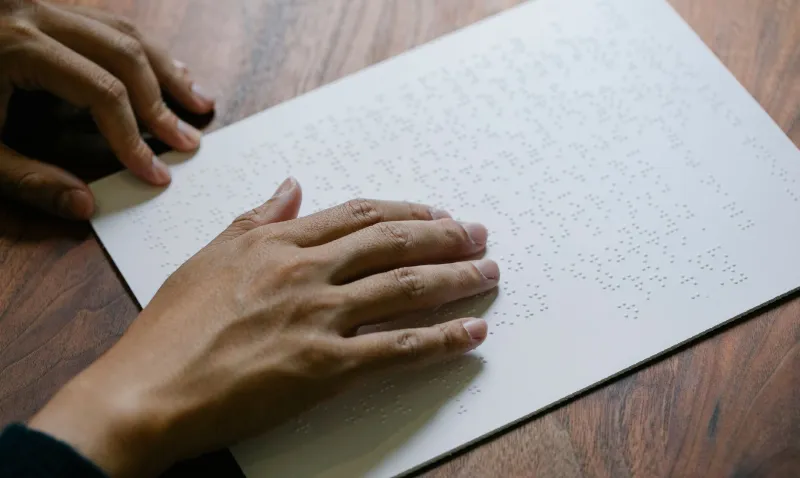
In a sunlit classroom outside Columbus, Ohio, fourteen-year-old Maya Hernandez runs her fingers across a line of raised dots and sounds out a word, slowly, the way she once sounded out print. Around her, a dozen other sighted students are doing the same. This is Braille Club — technically an elective — and it's part of a small but growing experiment in American education: teaching accessibility as a form of literacy, not charity.
The program, now in its third year, pairs braille instruction with orientation-and-mobility basics: how to sighted-guide respectfully, how to describe a room out loud, why you announce yourself before touching someone's cane. Nobody in this room is blind. That's the point.
The Case for Teaching Access Early
Ask the teachers why, and they don't lead with empathy. They lead with fluency.
"We teach Spanish so kids can talk to their neighbors," one program coordinator told us. "Why wouldn't we teach the skills to navigate a world alongside blind classmates and coworkers?" The framing matters. This isn't a sensitivity assembly with a simulation game and a juice box. It's structured instruction, assessed like any other subject.
And the curriculum has teeth. Students learn the braille cell, contractions, labeling systems. They practice reading menus, signs, and classroom materials nonvisually. By semester's end, they're producing tactile graphics for the school's science fair — actual accessible output, not just good intentions.
What Changes in the Hallways
Here's where it gets interesting. Several districts running these programs report something hard to quantify but easy to see: blind students describe a shift in how peers interact. Fewer grabbed elbows. Fewer shouted, slow-motion conversations. More people who just... ask.
One tenth-grader who is blind put it plainly: "It's the difference between being somebody's teachable moment and being somebody's lab partner."
Parents of sighted students report a different surprise — their kids coming home correcting them. Describing the dinner table without pointing. Announcing "left at the next door" out of habit. Accessibility literacy leaking into the household like any good education does.
The Skeptics, Fairly Heard
Not everyone's sold. Critics ask whether scarce school hours should go toward a skill most students may rarely use. Others worry about well-meaning programs crowding out the real fix: hiring qualified teachers of the visually impaired and properly funding braille instruction for blind students themselves — a population where braille literacy rates remain stubbornly low.
That critique deserves airtime. A braille elective for sighted kids should never become the district's substitute for actual services for blind students. The programs working best treat it as a supplement, not a centerpiece — and they're built alongside blind educators, not around them.
Literacy, Broadly Defined
Maybe the most radical idea here isn't the braille. It's the premise: that navigating a diverse world is a skill you can teach, practice, and test — the way we've always treated reading, typing, or a second language.
The students in that Ohio classroom aren't learning braille to be inspired. They're learning it because someone finally treated it as knowledge worth having. If that's where the next generation starts, imagine what they'll build — classrooms, apps, workplaces — where access was never an afterthought, because it was on the syllabus all along.