Seven Days in the Dark: Our Family's Experiment With Living Nonvisually
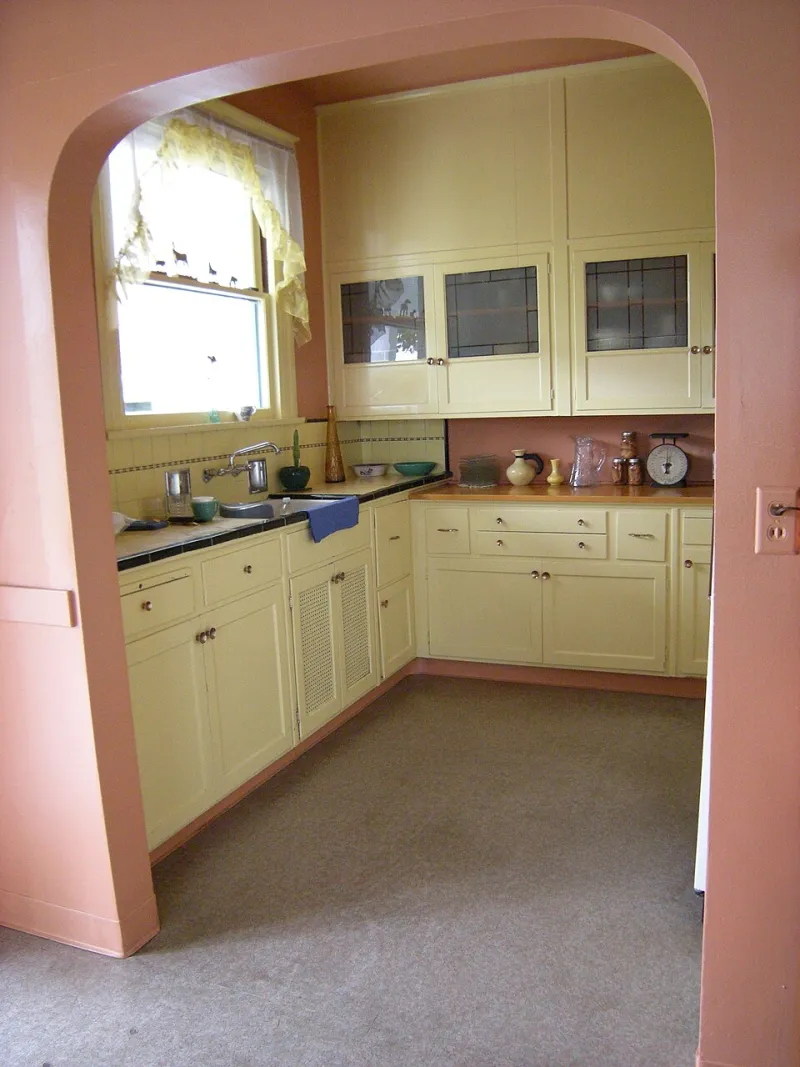
Photo: Joe Mabel, CC BY-SA 3.0, via Wikimedia Commons
Day one, 6:47 a.m., and my husband Dave poured orange juice into his coffee. Not a splash. Half a glass. Our ten-year-old, Maya, laughed so hard she knocked a fork off the counter, then couldn't find it.
We had committed to a week of living — fully sighted — using only nonvisual techniques: tactile labels, audio timers, memorized layouts, screen readers. The idea wasn't to simulate blindness (impossible, and a bit presumptuous to claim). It was to learn from the community that has spent generations perfecting these methods, and to see which of them belonged in our permanently sighted household anyway.
Answer: most of them.
The Kitchen Was the First Boss Level
We started with tactile labeling — little rubber bump dots and Braille-style adhesive labels on the spice jars, the microwave buttons, the thermostat. Within two days, Dave, who has the visual memory of a goldfish, was finding smoked paprika faster than before. The labels didn't care about lighting conditions, rushed mornings, or whether someone put the paprika back in the wrong spot.
Audio timers did the rest. The talking kitchen timer (about fifteen dollars online) freed us from hovering over the stove. Maya started using it for her reading log. I started using it for everything, because I am apparently a person who burns rice when unsupervised.
By day three, we had memorized the "cane route" of our kitchen — a consistent path from sink to stove to fridge with everything returned to its home. Blind friends of ours had told us this was the real secret: not better eyes, better systems. They were right. Our kitchen runs measurably smoother now, lights fully on.
The Screen Reader Was the Real Education
The humbling part came when we enabled VoiceOver on my phone for a full day. Navigating by swipe and audio was slower, yes — but the bigger revelation was how much of the internet is a disaster without sight. unlabeled buttons. Images with no descriptions. Menus that read themselves as "button, button, button."
Maya's take: "So some apps are basically broken for millions of people, and nobody fixed them?" Out of the mouths of ten-year-olds.
The Take-Home Checklist
Borrow these. They're life skills, not accommodations:
- Tactile markers on anything dangerous or frequently lost: stove dials, medication, keys.
- A talking timer for every household, sighted or not.
- Consistent placement rules — everything has a home, and it goes back there.
- Memorized escape routes from every room in your house. Ask anyone who's been through a house fire in the dark why.
- Try your own website and apps with a screen reader once a year, especially if you build them.
We turned the lights back on after seven days. The labels stayed. The timer stayed. The humility stayed, too. The blind community built workarounds for a world that wasn't designed for them — and in doing so, designed a bunch of things the rest of us didn't know we needed.