Pull, Tamp, Pour: The Cafés Where Your Latte Never Needed Eyes
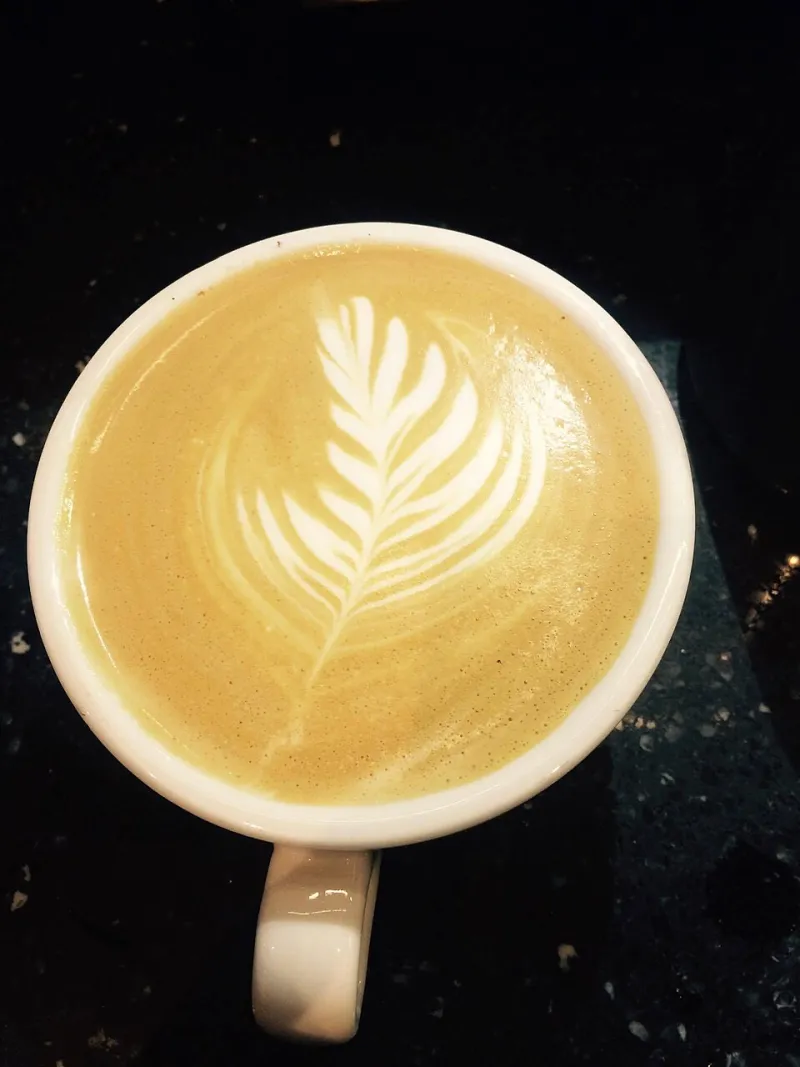
Photo: GeorgeMichaelFarewell, CC BY-SA 4.0, via Wikimedia Commons
The espresso machine at Bristle & Bean doesn't have a screen. It doesn't need one. Every dial on the grinder clicks into place at a detent you can feel through your fingertips, the portafilter locks with a quarter-turn that's the same in every café in America, and the milk pitcher tells you when it's ready by sound — that thin, high whistle that drops an octave the moment the foam is right.
That's the whole pitch at the growing handful of coffee shops across the US staffed entirely by blind and low-vision baristas: nothing about a good cappuccino ever required vision in the first place.
The Workflow Was Always Tactile. We Just Forgot.
Spend a morning at a nonvisual café and you notice something quickly: the operation isn't adapted for blindness so much as it's revealed by it. Marked canisters by texture, not label. A counter layout where the steam wand, the knock box, and the till each live in fixed positions, so muscle memory does the walking. Timers that chirp, card readers that talk, and a milk-steaming technique that relies on pitch rather than watching the whirlpool.
"People assume we built all this special stuff," one roaster-turned-café-owner told me. "Honestly, we mostly just stopped turning off the features that were already there. Every screen reader, every audio menu — it ships with the equipment. Most shops just never turn it on."
That's the quiet argument these cafés are making about workplace design more broadly. The Americans with Disabilities Act set the floor for access, but these shops are treating it like a starting line. Fixed station layouts. Consistent tool placement. Audio confirmations on every transaction. It turns out the accommodations that make a job possible for a blind worker — predictability, tactile organization, clear verbal handoffs — make the job better for everyone behind that counter.
The Customer Experience, Minus the Small Talk You're Expecting
Ordering at a fully nonvisual café rearranges the usual choreography. Nobody's making eye contact with you, so nobody's performing it either. Orders get confirmed out loud, clearly, without the mumbled drive-through ritual. Menus come in braille, large print, and audio — and the staff will read the specials with genuine enthusiasm, because describing a maple-oat cortado in vivid detail is a skill sighted cafés never bothered to develop.
Regulars describe it as oddly relaxing. There's no awkward dance at the pickup counter, no pointing at pastry cases, no assumption that you've already been helped because someone glanced your way. You're greeted by voice, served by voice, and — if you linger — engaged by voice.
And the coffee? Blind baristas have won cupping competitions and run quality-control programs for major roasters for years. The idea that tasting and pulling shots requires sight was always a myth. What's new is the storefront.
Why Sighted Customers Keep Coming Back
The obvious worry — that a nonvisual café runs on novelty — hasn't held up. The shops thriving in cities from Portland to Atlanta report repeat-customer rates that would make any franchise jealous. The reasons customers give are refreshingly un-charitable: the drinks are good, the service is fast, and the vibe is low-pressure.
The deeper reason might be what these spaces quietly undo. Most sighted Americans have never had a blind coworker, let alone been served by an entire blind staff. A café turns an abstract conversation about the 70% unemployment rate among working-age blind Americans into a ten-minute interaction with a person who just made you an excellent flat white and remembered your order from Tuesday.
You can't get that from an awareness campaign. You can get it with a punch card.
What the Rest of the Industry Should Steal
The lesson isn't "hire blind baristas" — though yes, do that. It's that designing for nonvisual work produces better systems, period. Audio confirmations reduce order errors. Fixed layouts speed up training. Textured wayfinding helps everyone in a rush. The same principle that's reshaping gaming, banking, and app design applies to your neighborhood espresso bar: build for the margins and the middle comes along for free.
A few chains have started piloting talking POS systems and braille menu boards after visiting these shops. That's the point. The cafés aren't asking for applause. They're asking for competitors.
So the next time someone tells you a job "requires vision," send them to the counter where the grinder clicks, the milk sings, and the regulars know the baristas by voice. The coffee never needed eyes. Neither did the person making it.