Please Touch the Art: How American Museums Are Finally Getting It
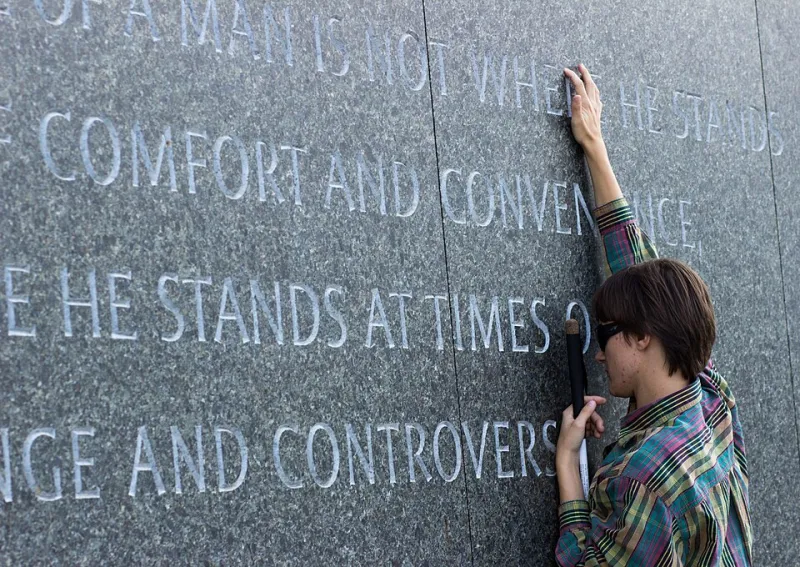
Photo: Shannon Godly, CC BY-SA 4.0, via Wikimedia Commons
There's a rule so universal in American museums that most of us never think to question it: look, don't touch. It's printed on brass plaques and repeated by docents in hushed tones. It protects the art, sure. But it also quietly locks out an entire community of potential visitors.
For blind and low-vision Americans, a traditional gallery visit can feel like being handed a book in a language you can't read. You're standing near the art. You're not experiencing it.
That's starting to change — and not just at the big-name institutions with seven-figure budgets.
The Day the Ropes Came Down
Ask anyone who's taken one, and they'll tell you: a good touch tour is a different kind of museum visit entirely.
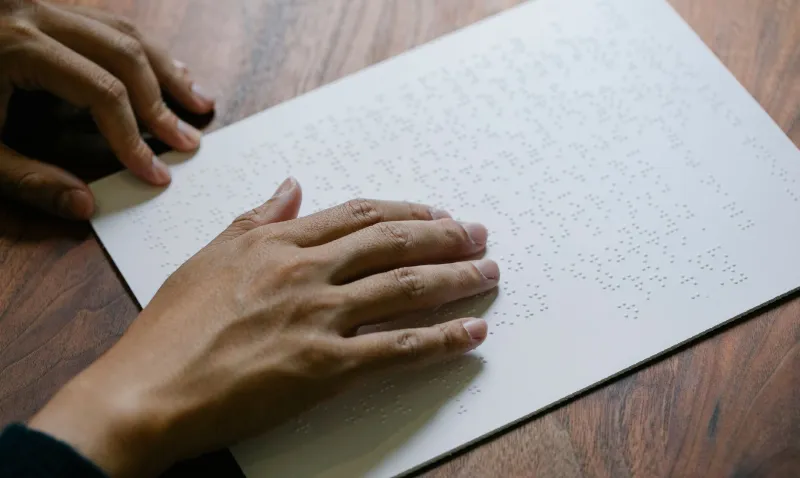
The concept is simple. Before the gallery opens — or in a dedicated space — blind visitors are invited to handle sculptures, tactile replicas, and textured materials while a trained guide describes what's in front of them. Not a lecture. A conversation.
"The first time I ran my hands across a bronze, I cried," says one visitor we spoke with, who asked to use only her first name, Denise. "People assume blind people don't care about visual art. I've cared my whole life. I just needed someone to stop telling me to keep my hands to myself."
Denise isn't alone. Museums from the Metropolitan Museum of Art in New York to the Smithsonian institutions in Washington, D.C., now offer regular touch tours and handling sessions. Smaller museums — a regional art museum in Ohio, a children's museum in Oregon — are running their own versions, often with more flexibility and less red tape than their larger counterparts.
3D Printing Meets the Old Masters
Here's where technology gets genuinely exciting.
The biggest barrier to tactile art has always been scarcity: you can't let hundreds of visitors paw a priceless original. But 3D printing and 3D scanning have changed the math. Museums can now produce durable, detailed replicas of paintings and sculptures — complete with raised textures, contour lines, and even layered brushstrokes.
The Met has experimented with 3D-printed reproductions of works in its collection. The Prado in Madrid famously made headlines with its "Touching the Prado" exhibit, and American curators took notes. Projects like those from 3DPhotoWorks, a New York-based company that converts paintings into tactile prints, have brought the idea to galleries and schools across the US.
A tactile Van Gogh isn't the same as seeing Starry Night. Advocates will be the first to tell you that. But it's not supposed to be. It's a translation — the way an audiobook is a translation. Different senses, same story.
What Works, and What's Just Patronizing
Not every accessibility effort deserves a gold star. Blind visitors we spoke with were candid about the difference between genuine access and performative box-checking.
What works:
- Consistency. Touch tours offered once a quarter, by appointment only, with two weeks' notice? That's not access. That's a special occasion.
- Blind consultants in the room. If your tactile exhibit was designed without blind people involved, it shows. Raised lines that don't correspond to anything meaningful, audio guides that describe colors without context — blind reviewers catch these mistakes instantly.
- Training frontline staff. A curator can design a beautiful program, but if the security guard at the door flinches when you reach toward a sculpture, the whole thing falls apart.
What doesn't:
- The single "accessible" corner. One small tactile display tucked behind the gift shop does not make a museum accessible.
- Infantilizing language. "Isn't that amazing, sweetheart?" is not interpretation.
- Treating touch as charity. Tactile design often improves the experience for everyone — kids, autistic visitors, anyone who learns by doing. Museums that get this frame touch as good design, not special treatment.
Why Touch Is the Next Frontier
Advocates argue that museums are actually behind the curve. Restaurants have audio menus. Apps have screen readers. Airports have tactile paving. Meanwhile, the average art museum still operates on the assumption that vision is the only legitimate way to experience culture.
"We solved this for music a century ago," one accessibility consultant told us. "Nobody thinks it's remarkable that blind people love concerts. The art world just hasn't done the same homework yet."
The encouraging part? The infrastructure is getting cheaper. A 3D scan that would have cost tens of thousands of dollars a decade ago can now be done with a decent camera and open-source software. A small museum with a motivated docent and a few thousand dollars can launch a tactile program.
The barriers left aren't technical. They're attitudinal.
How to Push Your Local Museum
You don't need to work at the Met to move this forward. A few practical steps:
- Ask. Call your local museum and ask if they offer touch tours or tactile materials. If the answer is no, ask why. Requests get logged. Enough of them become a mandate.
- Volunteer as a consultant. If you're blind or low-vision, museums need your feedback more than your patience. Charge for it if you can.
- Show up. Museums track attendance. Accessible programs with empty rooms get cut. Accessible programs with waiting lists get expanded.
The truth is, the "do not touch" rule was never really about the art. It was about who museums imagined standing in front of it. A growing number of American institutions are redrawing that picture — one replica, one tour, one outstretched hand at a time.
And honestly? The art can take it. Marble has survived worse than curiosity.