Don't Call Them Inspirational: The Blind Pros Who Are Just Really Good at Their Jobs
There's a particular compliment that lands like an insult. A blind musician finishes a set, and someone in the crowd says, "You're such an inspiration." She thanks them. What she's thinking is: I practiced eight hours a day for fifteen years. The inspiration is the practice.
People in the disability community have a name for this — the inspiration tax. Every time a blind professional is praised for merely existing competently in public, the bar for their actual work drops a little lower. This piece is about people who refuse to pay it. And the through-line in every one of their stories isn't superhuman courage. It's tools, technique, and adaptation — the same stuff every serious professional uses.
The Guitarist Who Learned in Tabs He Couldn't Read
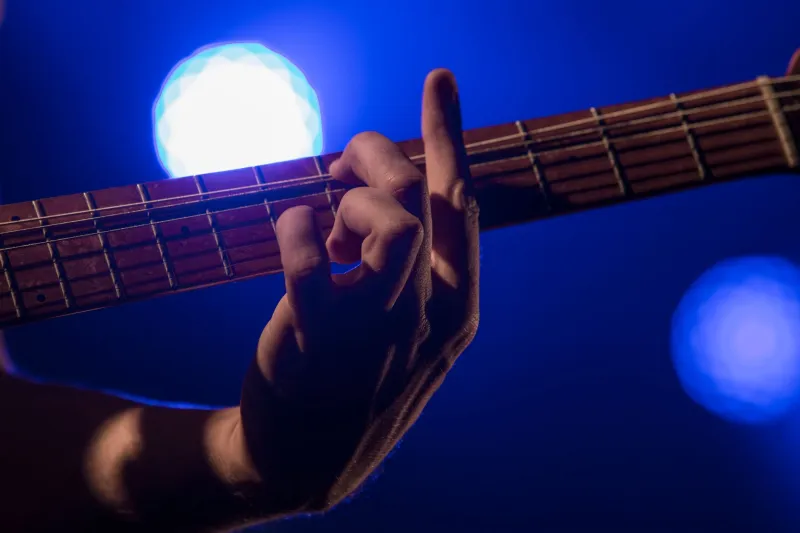
Rafael, a rock guitarist from Austin, learned music entirely by ear because braille sheet music for popular music barely exists. What does exist is a thriving ecosystem of ear-training apps, slowed-down audio software, and accessible digital audio workstations like Reaper with screen reader support — technology that has quietly collapsed barriers in music production over the last decade.
"People assume the guitar is the hard part," he says. "The hard part is that every tutorial on the internet is a video. I had to build my own curriculum out of albums and patience." When producers see him play, they stop seeing a blind guitarist. They see a hired gun. That shift — from spectacle to sideman — is the whole fight.
The Line Cook Running a Hot Line by Sound
Marcus works the sauté station at a busy farm-to-table spot in Chicago. His mise en place is arranged like a keyboard: proteins left, aromatics right, everything in a fixed geography he can navigate at speed. He uses talking thermometers, tactile markings on pans, and a braille-labeled prep system he designed himself because nothing on the market fit.
His chef's initial hesitation lasted exactly one dinner rush. "Kitchens run on rhythm," Marcus says. "I've got better rhythm than half the sighted guys, because I can't rely on my eyes to bail me out." He's not asking for awe. He's asking restaurateurs to stop screening out blind applicants for culinary school before the first knife is ever lifted.
The Swimmer Who Counts Strokes, Not Laps
Anika, a competitive swimmer in Florida, has a simpler relationship with the pool than most of us do with our own driveways. Blind swimmers count strokes to know when the wall is coming, and many train with a tapper — a coach with a pole who gives a gentle tap at the turn. She trains six days a week, holds regional records, and would like everyone to know that the tap is standard equipment, not a miracle.
The innovation here is worth noticing: adaptive sport has driven real engineering, from audible stroke-count tech to haptic coaching wearables developed originally for Paralympic athletes. Accessibility, as usual, is where some of the best technology gets invented.
Talent Isn't the Story. Access Is.
Here's what ties a guitarist, a cook, and a swimmer together: none of them succeeded because of their blindness, and none of them succeeded despite it, really. They succeeded because someone gave them tools, training, and a fair shot — and they did the work.
So the next time you meet a blind professional doing their job well, skip the inspiration speech. Ask about their technique. Compliment the solo, the dish, the split time. Reserving your awe for actual achievement isn't just polite — it's the first real act of equality most people can perform in under ten seconds. Save the standing ovation for the music.