Built Different: The Blind Innovators Rewriting What Assistive Tech Looks Like
Ask most people to picture assistive technology and they'll imagine a well-meaning engineer in a lab coat designing something for blind users. That picture is outdated. Across the US, blind and low-vision innovators are the ones holding the screwdrivers, writing the code, and deciding what independence should actually feel like.
We spoke with users and creators across the country about the tools reshaping daily life. Here are seven that kept coming up.
1. Screen Readers That Sound Like Friends
Software like JAWS and the free, open-source NVDA have been around for years, but what's changed is who's shaping them. Blind developers contribute code, test builds, and push for voices that don't sound like a robot reading a warranty.
"When I got my first screen reader, I could finally fix my own computer," says Marcus, a software tester in Atlanta who's been blind since birth. "Now I literally get paid to break apps—which means apps work better for everyone."
2. Smart Canes With a Sixth Sense
The traditional white cane is brilliant, but a new generation adds ultrasonic sensors and haptic feedback that buzz when obstacles loom at head height—things a cane tip can't catch. WeWALK and similar smart canes pair with phones for navigation, transit info, and voice assistants.
The key, users stress, is that these don't replace the cane. They extend it.
3. Apps That Describe the World
Be My Eyes connects blind users with sighted volunteers over video—useful when the microwave is blinking cryptically or the milk jug looks suspiciously similar to the orange juice. Its AI companion, Be My AI, now generates detailed image descriptions instantly.
"I used it to describe a painting my niece made me," says Denise, a retired teacher in Ohio. "That's not an accessibility feature. That's just being included."
4. Currency Readers and ID Apps
US bills all feel the same—a long-standing design failure blind advocates have criticized for decades. Apps like the US Treasury's own currency reader, plus AI-powered money identifiers, help close the gap while litigation and advocacy push for tactile currency.
5. Braille Displays That Fit in a Backpack
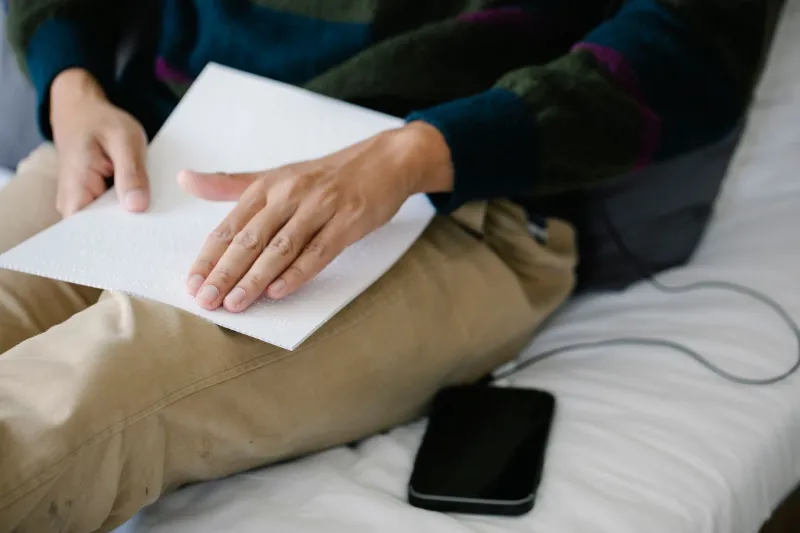
Refreshable braille displays—rows of pins that rise and fall to form braille in real time—used to cost as much as a car. Newer entrants are driving prices down and form factors down with them. The Orby and similar devices mean a student can carry a library in braille, not just listen to it.
"Literacy matters," says Dr. Amara Fields, a blind rehabilitation specialist in Chicago. "Audio is wonderful, but braille is spelling. It's math. It's independence on paper."
6. Wayfinding for Indoor Worlds
GPS is great until you step inside a building. Indoor navigation tools like Aira and NaviLens—colorful optical tags now appearing in US transit systems from New York to San Francisco—give precise, real-time guidance where satellites can't reach.
7. Mainstream Tech That Got the Memo
Maybe the biggest shift: accessibility stopped being an afterthought. iPhone and Android screen readers ship built-in. Visual Look Up, Live Captions, and image descriptions are standard features. That happened because blind engineers work at these companies and because disabled users demanded more than retrofitted goodwill.
The Common Thread
Notice what all seven have in common? Blind people didn't just test these products—they imagined them. The most useful assistive tech comes from lived experience, not from a conference room guessing at it.
That's the real innovation story: not devices, but a community that stopped waiting to be designed for and started designing. The next breakthrough won't come from someone imagining what it's like to be blind. It'll come from someone who already knows.