Twenty-Two Clicks to Nowhere: Three Job Seekers, Three Portals, Zero Applications
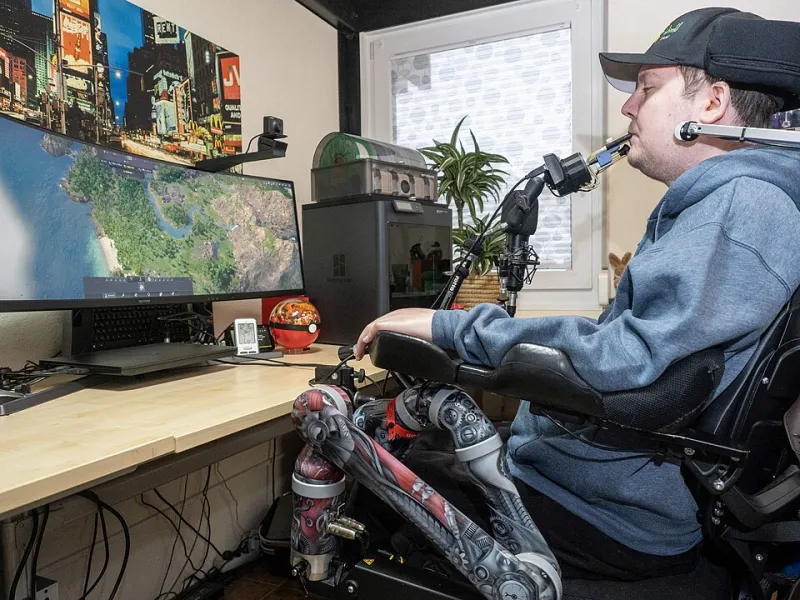
Photo: InclusiveGameLab, CC BY-SA 4.0, via Wikimedia Commons
The Job That Didn't Exist Yet
Marcus Ellery found the posting at 7:40 on a Tuesday morning. Customer service representative, a state university two towns over from his Ohio home, $19 an hour with benefits. He'd been out of work for eight months. He opened the link with his screen reader before his coffee finished brewing.
By 7:52, he'd stopped trying.
The application lived inside a third-party portal — one of the big names in HR software, the kind that quietly runs hiring for thousands of American employers. The welcome page loaded fine. Then came the dropdown menus that announced nothing, the upload button his screen reader couldn't reach, and finally, the piece de resistance: a captcha that asked him to "select all images containing traffic lights."
"I've never seen a traffic light," Marcus told us, laughing in the way people do when the joke has stopped being funny. "But the machine insists I prove I'm human by pretending I have."
We asked Marcus to do what he'd done for the previous seven months: document everything. What follows is his logbook, plus the stories of two other blind job seekers we followed through the same gauntlet this spring. Together, their records sketch a picture of a hiring system that filters people out before a single human being knows they exist.
What Twenty-Two Clicks Actually Sounds Like
Screen readers translate the web into speech. When a page is built correctly, that's remarkable technology — a blind user can apply for a job, order groceries, file taxes. When a page is built carelessly, the speech collapses into fragments: "button, button, unlabeled, edit field, blank."
Marcus's log for the university job reads like a transcript from a broken machine. Twenty-two clicks to reach the resume upload. Four fields with no labels, so his screen reader announced them as nothing at all. One calendar widget for his birthdate that no keyboard could navigate. And the captcha, which has no audio alternative on this particular portal — a violation of basic web accessibility standards, and, according to the lawsuits piling up in federal courts, possibly a violation of the Americans with Disabilities Act.
He saved a screenshot, closed the tab, and moved on. Total time lost: 34 minutes. Total applications that day: he'd try two more. Total completed: zero.
The Spreadsheet Nobody Wanted to Exist
Denise Okafor, a blind HR analyst in Atlanta who lost her vision at 31, turned her own job hunt into data. For six months, she tracked every application: the company, the portal, the point of failure, whether a workaround existed.
Her spreadsheet, which she shared with us, is quietly devastating. Of 114 applications attempted, 41 failed outright — she could not submit them at all. Another 28 she completed only by asking a sighted friend to sit beside her and read the screen, a workaround she describes as "humiliating in a way that's hard to explain to people who've never needed help logging into their own future."
Her math: roughly one in three opportunities died before a recruiter ever saw her name.
"People assume the barrier is the interview," Denise says. "It's not. The barrier is the doorbell. I never even get to knock."
The Companies Getting Sued — and the Ones Getting Shamed
Here's the part that should make every HR department in America squirm: the technology behind these portals is concentrated in a handful of vendors, which means a single inaccessible design choice can lock out blind applicants at thousands of employers at once.
Civil rights firms have noticed. Lawsuits against major applicant tracking systems have multiplied over the past several years, arguing that portals with unlabeled fields, keyboard traps, and visual-only captchas discriminate under the ADA and state laws like California's Unruh Act. Some cases settle quietly. Others have pushed vendors to ship fixes — better field labels, audio captchas, compatibility testing with JAWS and NVDA, the screen readers most blind Americans use.
But advocates describe a pattern: lawsuits produce patches, not overhauls. The fixes arrive for the pages being complained about, while new features ship with the same old problems baked in.
"Accessibility is treated as a legal expense, not a design standard," says one disability rights attorney we spoke with, who asked not to be named because of active litigation. "Nobody at these companies would ship a portal that crashed for everyone. They ship ones that crash for us, and wait to see if anyone sues."
What Actually Works
It's worth saying plainly: accessible hiring software exists. Vendors who test with blind users, who build audio alternatives into their captchas, who treat WCAG compliance as a launch requirement rather than a post-launch apology — they're out there, and they don't cost meaningfully more. Some employers have gone further, offering a simple alternative pathway: a phone number, an email address, a human being who can accept an application in under ten minutes.
Denise eventually landed a role — not through the portal of the company that hired her, but around it. A recruiter she'd networked with walked her resume in through the side door. She's grateful. She's also clear-eyed about what that means.
"The system worked because someone I knew broke the system," she says. "That's not accessibility. That's luck with a LinkedIn account."
Count the Losses
Marcus is still applying. His logbook now runs to 63 pages. When we asked what he'd say to the executives who build these portals, he didn't have to think long.
"Come sit with me for one application," he said. "One. Bring a blindfold if you need one. You'll fix your software in an afternoon."
Until then, thousands of qualified blind Americans will keep clicking into the void — and the resumes piling up unsubmitted won't show up in any unemployment statistic. They'll just be gone, like jobs that never existed at all.
If you've been locked out of an online application, The Blind Project maintains a community log of inaccessible hiring portals. Your documentation helps. Every click counts.