Dinner in the Dark, With the Lights On: Three Families Try a Month of Blindfolded Meals
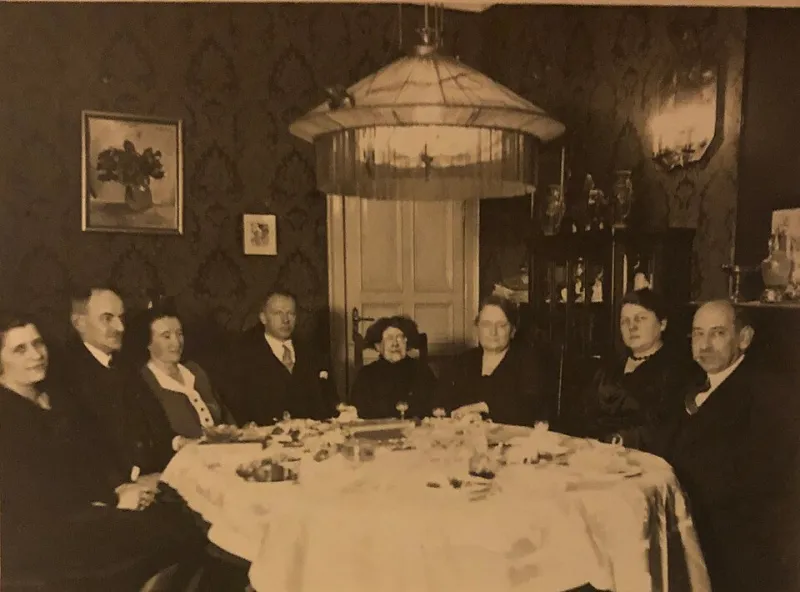
Photo: Hans Bernhard Schwerin, Public domain, via Wikimedia Commons
The Hendersons of Columbus, Ohio, have a new Tuesday tradition. At 6 p.m. sharp, Dad ties on a sleep mask, Mom counts the forks by touch, and their ten-year-old daughter — the only one allowed to keep her eyes open — narrates the chaos from across the table.
They're one of three families who agreed to eat one blindfolded meal a week for a month as part of an informal experiment we followed here at The Blind Project. The question wasn't whether they'd spill the pasta sauce. It was whether any of it would stick.
The Rules of the Table
Each family set the same terms: one shared meal per week, everyone blindfolded except one rotating "sighted buddy," no phones, no cheating, and a debrief afterward where everyone had to name one thing they noticed.
Week one was, by every account, slapstick. "I stabbed my hand looking for a green bean," admits Marcus Henderson. "My son drank from my water glass. We laughed so hard we forgot we were supposed to be learning something."
By week three, something quieter happened. The kids started describing the food out loud without being asked. They stopped reaching across each other's plates. The Hendersons' daughter began announcing where everything was on the table — a habit she'd apparently picked up from watching orientation and mobility videos her parents found online.
That's the part the families loved. It felt like growth.
What the Consultants Said (Politely, Then Not So Politely)
We ran the families' journals past two blind consultants, and neither was surprised by the arc — or impressed by the premise.
"A blindfolded dinner teaches you that dinner is hard when you're blindfolded," says Denise Okafor, a rehabilitation teacher from Atlanta. "It doesn't teach you what blindness is. I've never experienced a dinner table that rearranges itself. These families had a stable room, familiar food, and total trust. That's not a simulation of my life. That's a party game."
Her deeper critique: darkness simulations center the sighted experience. The family gets to take the mask off. The takeaway becomes "wow, that was hard" — which can curdle into pity rather than understanding.
The second consultant, Denver-based accessibility engineer Ray Tran, put it more bluntly: "If your empathy exercise ends, you've learned that blindness ends. It doesn't."
So Did It Change Anything?
Here's where we'll be honest: maybe, a little.
The Hendersons installed better lighting in their hallway — for themselves, as they age, but the thought started here. The second family, in Portland, started requesting audio descriptions at their local movie theater after realizing how much visual information they'd been unconsciously consuming. The third family asked their school district about its orientation and mobility services and learned, to their surprise, that the waiting list was months long.
None of them became experts. All of them became slightly louder advocates, which is something.
A Better Recipe
If your family wants to try this, our consultants offered a modification: flip the exercise. Instead of simulating blindness, practice the skills that actually make the world work — describe your surroundings out loud, learn what audio description is and turn it on, watch a video by a blind creator instead of about blind people.
"Empathy isn't putting on my blindfold," Okafor says. "It's reading the menu before I arrive. It's asking, not assuming."
The dark half hour is a fine gateway. Just don't mistake the mask for the life.