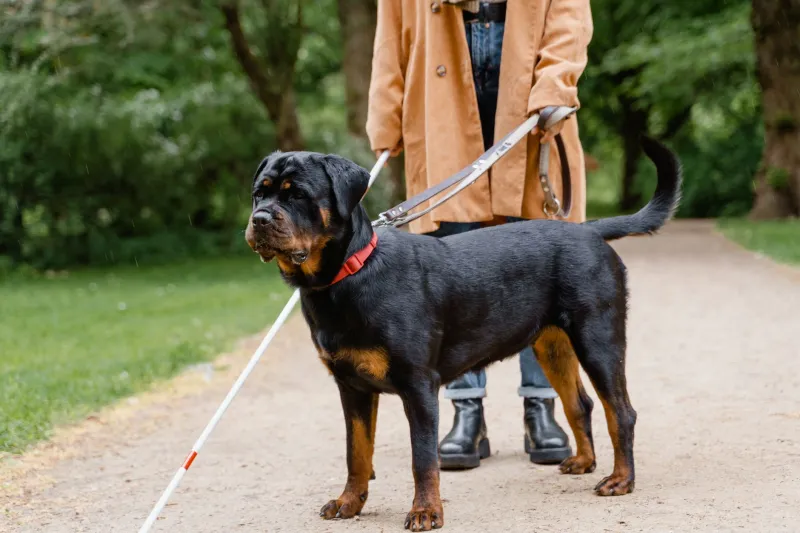
Fifty Dollars, Eighteen Months, Three Agencies: The Absurd Journey to Get a White Cane in America

Here's a fun party fact that isn't actually fun: the mobility tool carried by hundreds of thousands of blind and low-vision Americans — the white cane — is not reliably covered by Medicare. A device that retails for somewhere between twenty and eighty dollars. Not covered.
Contrast that with what is covered. If you're diagnosed with a condition that threatens your vision, Medicare will often pay for the surgery to treat it. Cataract extraction? Usually yes. But the cane you might need while your sight is failing — or after it's gone? That's where the system shrugs.
We spent weeks talking to people who've navigated this maze, and their stories all circle back to the same question: how did a fifty-dollar piece of aluminum and reflective tape become harder to acquire than equipment ten times the price?
The Patchwork Nobody Designed
There is no single door to knock on. That's the first thing to understand.
Depending on where you live, you might get a cane through your state's vocational rehabilitation agency, a private nonprofit, a veterans' program, an insurance waiver, a charity that distributes free canes, or — increasingly — out of your own pocket. The National Federation of the Blind has long run a program offering free canes to anyone who requests one, precisely because the formal systems fail so often.
The result is a geography of luck. A retiree in Ohio might get orientation and mobility (O&M) training through a senior services program within weeks. Her cousin in rural Alabama might wait the better part of a year for a state agency to schedule an instructor who covers three counties. Same country. Same need. Wildly different timelines.
"I told my caseworker I was afraid to leave my own driveway," one applicant told us. "She was sympathetic. Sympathy doesn't get you across a street."
The Paperwork Gauntlet
Let's walk through what the process can actually look like when you go the traditional route.
First, you need documentation of legal blindness — which itself requires an eye exam, a specialist's sign-off, and specific measurements of visual acuity and field of vision. Then comes the application to your state rehabilitation agency, where caseloads are famously heavy and waitlists for services are a chronic reality. Once you're in the system, you're typically assigned an O&M specialist who evaluates whether you need a cane, what type, and how to use it.
That training is genuinely valuable — proper cane technique matters, and nobody's arguing against it. But here's the catch: in many programs, the cane is bundled with the training. No instructor available yet? No cane. So people who could be independently navigating their own neighborhoods are instead waiting for a scheduling slot, sometimes for months, sometimes longer.
Compare that to a manual wheelchair, which Medicare covers under Durable Medical Equipment after a face-to-face exam and a supplier's documentation. It's a process, but it's a defined process. The cane, by contrast, often falls through a definitional crack — it's not durable enough to count as durable medical equipment, and it's not medical enough to count as anything else.
Who Falls Through
The people most affected by these gaps aren't hard to predict. Older Americans losing vision late in life — the largest group of blind and low-vision people in the country by far — often don't know these programs exist, or assume Medicare will handle it the way it handled their hip replacement. People in rural areas face instructor shortages that no application can fix. Low-income folks who can't simply buy the cane themselves are stuck in exactly the queue the system was supposed to prevent.
And the stakes are real. Falls, isolation, job loss, depression — the research on untreated vision loss and mobility reads like a cascade. The cane isn't a luxury item. For many people it's the difference between their own front door and their own four walls.
What Fixing This Would Actually Take
The good news is that the fixes aren't mysterious, and some are already underway.
Advocacy groups have pushed for years to expand Medicare coverage of low-vision devices, and there's genuine bipartisan appetite for it — few budget lines are as easy to defend as "let grandpa cross the street." Several states have strengthened their rehabilitation funding. Nonprofits keep filling the gaps, though a charity safety net is a poor substitute for a functioning system.
There's also a cultural shift worth naming: the growing consensus that blindness services shouldn't be treated as a niche concern but as basic infrastructure — the same way we think about crosswalk signals and curb cuts. When the federal government requires accessible pedestrian signals at intersections, it's acknowledging that blind Americans move through public space. The tools that make that movement possible deserve the same seriousness.
Until then, the absurdity continues. A country that will spend tens of thousands of dollars on a surgery will ask a newly blind person to wait, apply, document, and hope for the privilege of holding a fifty-dollar cane.
We can grade that only one way: incomplete. And the homework is overdue.