The Whole Kitchen Works Differently: Inside America's Restaurants Built by Disabled Staff
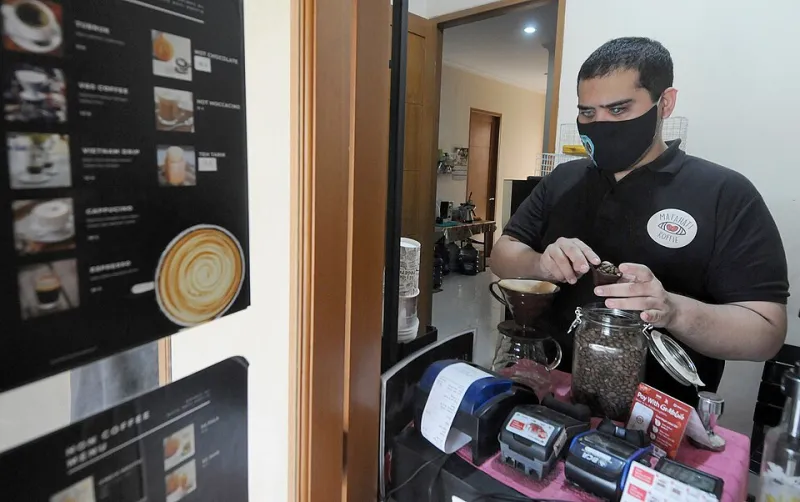
The espresso machine at Sensory Coffee House in Austin hisses, grinds, and steams like any other. What's different is the ordering: customers point to a menu board, type on a tablet, or scribble on a notepad by the register. Nobody here treats that as a workaround. It's just how the place runs.
"People assume silence is a barrier," says co-owner Marisol Vega, who has been deaf since childhood. "Silence is the product. You should see how well our customers listen."
Vega's café is part of a quiet but growing movement: restaurants, bars, and coffee shops across the US that were built — from the ground up — by and for people with disabilities, where disabled staff aren't an accommodation story but the operating system itself.
When Accessibility Is the Blueprint, Not the Renovation
Most businesses treat accessibility like a retrofit: a ramp bolted on, a braille menu printed after the fact, a compliance checklist run through once a year. The places we visited flipped that sequence. They started with access and designed everything else around it.
At a diner outside Columbus, the owner — a wheelchair user and former line cook — installed lowered counters, front-facing cooktops, and wide turning paths in the kitchen before the first fryer was ever plugged in. The result reads less like an adaptive kitchen and more like a smart one. Staff move faster. Injuries drop. The pass is visible from every station.
"I stopped designing for my chair and started designing for workflow," the owner told us. "Turns out workflow is better for everybody."
The Business Case Nobody Wants to Admit
Here's the part that makes hiring managers squirm: these restaurants often outperform their peers. Lower turnover. Fiercely loyal regulars. Free word-of-mouth in a 60-million-person disability community that is chronically underserved by the hospitality industry — and chronically underestimated by it.
Consider the numbers. Roughly 70% of working-age blind Americans are unemployed, and disabled workers broadly face employment rates half that of their nondisabled peers. Yet the labor shortage in food service has been a national headline for years. The talent is right there, and the industry keeps saying no.
One bar manager in Portland, who is blind, put it bluntly: "I can pour a perfect Manhattan by weight and sound. I can read a room by the noise it makes. But I've had managers tell me they 'weren't sure how that would work.' You know how it works? You hand me a shaker."
What Changes When the Staff Changes
Spend an evening in one of these kitchens and the differences are small, practical, and honestly kind of brilliant:
- Menus get described, not just printed. Servers learn to talk about food in texture, temperature, and aroma — which makes the menu better for sighted customers too.
- Sound becomes information. Timers get replaced by audio cues; the fryer's rhythm tells a blind cook when the oil is ready.
- Communication gets flexible. A mix of ASL, tablets, and old-fashioned notepads means no single channel becomes a gatekeeper.
- Training slows down, then speeds up. New hires get real onboarding instead of a two-hour shadow shift — and they stay.
None of this requires a consultant or a six-figure build-out. It requires asking the people doing the work what the work needs.
The Roadblocks Are Real
Let's not romanticize it. Disabled restaurant owners describe battles with insurers unfamiliar with their operations, landlords who hear "wheelchair-accessible kitchen" and picture a six-figure remodel, and lenders who ask pointed questions about "capacity." Several owners we spoke with bootstrapped entirely, tapping savings and crowdfunding because traditional financing wasn't on the table.
There's also the expectation tax. Every interview turns into a seminar on disability. Every profile — including this one, admittedly — risks making the food sound secondary to the staff's diagnoses. The cooks we met would like it noted that the gumbo is genuinely excellent, thank you, and the diagnosis is nobody's business at the table.
Why It Matters Beyond the Dining Room
Restaurants are America's most accessible workplace in theory — the biggest private-sector employer, the classic first job. When they get hiring right, an entire pipeline opens. When they get it wrong, an entire pipeline closes before it starts.
That's why these businesses matter. They're not just feeding neighborhoods. They're handing the industry a working model, staffed and proven, and daring it to look away.
The next time you're choosing where to eat, consider the places where accessibility shaped the whole design. The coffee tastes the same. The difference is who's making it — and how many doors had to stay closed before someone finally built one that opens both ways.