Fifty Thousand Dollars, Two Years, One Dog: Inside the Business of Guiding Blind Americans
The golden retriever trotting through a Portland grocery store isn't just a good boy. He's the end product of an assembly line that started before he was born — one that costs more than a used Honda and takes longer to finish than an associate degree.
Most people have no idea. And that ignorance has consequences, because the gap between what guide dogs cost and what blind Americans can access is widening every year.
Where the Money Actually Goes
Industry estimates put the full cost of breeding, raising, and training a single guide dog somewhere north of $50,000, sometimes closer to $70,000 at the larger schools. That covers veterinary care, a specialized breeding program, professional trainer salaries (trainers complete multi-year apprenticeships), food, equipment, and the weeks of residential training where a handler and dog learn to work as a team.
Here's the part that surprises people: the vast majority of legitimate guide dog schools in the US — places like Guide Dogs for the Blind, The Seeing Eye, and Leader Dogs for the Blind — provide their dogs to handlers free of charge. They fundraise like nonprofits because they are nonprofits, leaning on donors, bequests, and corporate sponsors to absorb the cost.
But not every program operates that way. The guide dog industry in America is, famously, unregulated. There is no federal licensing requirement for service dog training. A private trainer can charge $25,000 or more for a dog of wildly inconsistent quality, and there's no watchdog with teeth. Some smaller programs have legitimate waitlists and rigorous standards. Others are essentially selling a lab puppy and a vest.
The Puppy Raiser Pipeline
The journey begins with volunteers. Puppy raisers — often families, college students, or 4-H kids — take home eight-week-old puppies and spend 12 to 18 months teaching house manners, socialization, and basic obedience. They cover food and vet visits out of pocket, and then, sometimes with tears in the driveway, hand the dog back.
Roughly 40 to 50 percent of dogs wash out of formal training. A hip issue here, a prey drive there, and suddenly that perfectly socialized golden is a beloved pet instead of a working partner. The attrition alone is a huge driver of cost.
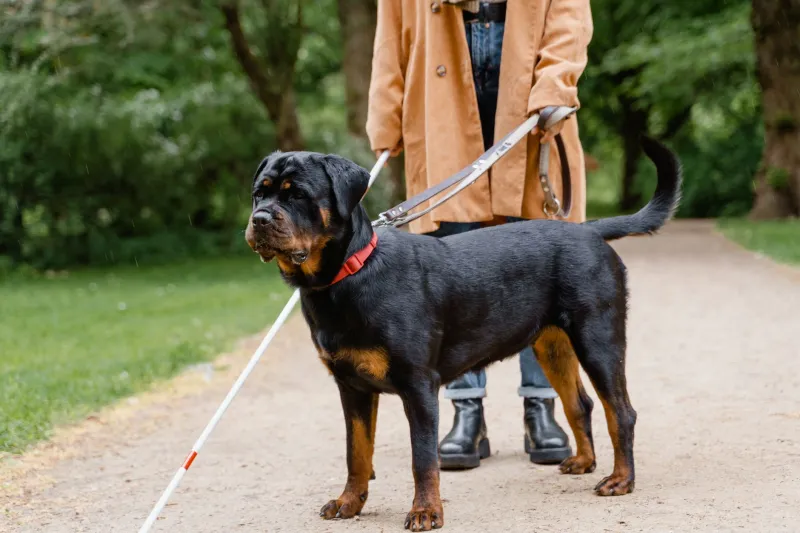
Those who make it through learn intelligent disobedience — refusing a command when following it would put their handler in danger, like stepping into traffic. That judgment is what separates a $50,000 dog from a $50 dog with a backpack.
The Wait Is the Real Barrier
If money isn't the obstacle, time is. Waitlists at major schools routinely stretch one to three years, sometimes longer for people with specific needs — allergies, additional disabilities, or handlers who need a dog matched to a demanding commute. There are roughly half a million guide dog users worldwide by some estimates, and demand keeps climbing as the population ages and veterans return with vision loss.
For a newly blind person, three years is an eternity. That's three years of navigating a job search, a new city, a changed marriage with a cane and a prayer. The waiting list isn't a bureaucratic inconvenience; it's a disability gap in real time.
The Insurance Question Nobody Saw Coming
Here's the policy fight brewing under all of this: health insurance — private, Medicare, Medicaid — generally does not cover guide dogs. They're classified as assistive equipment outside medical necessity, even though a guide dog demonstrably increases employment, independence, and physical activity for handlers.
Some veterans get coverage through the VA under limited circumstances. Everyone else is at the mercy of charity. Advocates have pushed for years to change this, arguing that if the government will pay for a power wheelchair, it should help fund a mobility partner that costs the same. Legislation has been introduced. Little has passed.
Until then, the guide dog economy runs on bake sales, gala dinners, and the quiet generosity of puppy raisers who give a year of their lives and hand back the leash. The dogs are miraculous. The system that produces them, though, is held together with duct tape and good intentions — and blind Americans deserve better than duct tape.