Where Every Cut Gets a Play-by-Play: The Small Businesses Turning Accessibility Into Their Secret Sauce
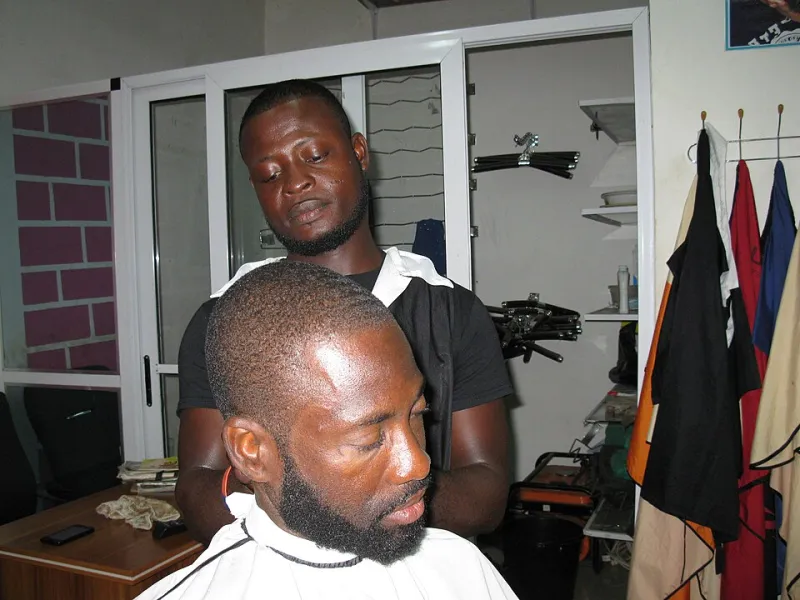
Photo: Gkbediako, CC BY-SA 4.0, via Wikimedia Commons
There's a moment that happens in Marcus Whitfield's barbershop in Detroit that you won't see in any corporate training video. A new client settles into the chair, mentions casually that he's blind, and braces — visibly — for the awkward pause. Marcus doesn't pause. He grabs his clippers, starts the conversation he starts with everyone, and then adds one line that has quietly built him a loyal, word-of-mouth following across Metro Detroit: "I'll tell you everything I'm doing before I do it. Stop me anytime."
That's it. That's the whole accommodation. Talk.
The Play-by-Play Economy
Whitfield, who is sighted, started narrating his cuts six years ago after a blind client told him how exhausting barbershops could be — the silence, the guessing, the moment a stranger's hands approach your head with scissors and no warning. Now his shop has a small but devoted blind and low-vision clientele that drives in from Ann Arbor, Toledo, even Windsor, Ontario.
"People think I did some heroic thing," he laughs, sweeping hair off the floor. "I literally just described a haircut. You'd do it for a friend."
Across the country, a similar quiet revolution is happening in independent businesses — the barbershops, cafés, salons, and restaurants that can't afford consultants but can afford to pay attention. In Portland, a café owner trained her staff to hand customers their drinks while speaking first, so nobody waves a hand in front of someone's face. In Atlanta, a salon keeps its product lineup in consistent spots and offers a hands-on tour of the station before any service begins. None of it required a lawyer, a remodel, or a certificate on the wall.
Accessibility Is Not a Donation
Here's the part that gets lost in the conversation: these businesses aren't running charities. They're running businesses, and the numbers back them up.
Americans with vision loss represent a customer base in the tens of millions, and their spending power is enormous. Yet the disability community has long described the same experience: show up to a business, get treated as an inconvenience or, worse, an inspiration, and take your money somewhere that treats you like a customer.
The shops that get it right aren't winning awards. They're winning repeat customers — and their friends, families, and neighbors. Loyalty in the blind community travels fast, because good service is rare enough to be worth telling people about.
"I've been to places that fumbled and places that figured it out," says Denise Okafor, a low-vision regular at a Columbus nail salon. "Guess which one I go back to every three weeks. Guess which one my whole book club goes to now."
What Actually Works Behind the Counter
Talk to owners who serve blind customers well, and the same themes keep surfacing — none of them complicated:
- Speak first. Greet the customer verbally before approaching. Announce yourself and others who join the conversation.
- Offer, don't assume. Ask "Would you like me to describe the menu?" rather than grabbing an arm or reading everything unprompted.
- Describe the space. A quick orientation — where the chair is, where the register sits, where the restroom is — takes thirty seconds and changes everything.
- Narrate the service. Barbers, stylists, and servers who talk through each step turn anxiety into trust.
- Keep things where they are. Consistency beats decoration. If the sugar packets move every week, that's an accessibility problem.
- Train for dignity, not pity. Staff should treat blind customers as customers, not puzzles to solve or heroes to flatter.
Your Week-One Playbook
If you run a small business and want to start tomorrow, here's the sidebar version — no budget required:
Monday: Walk your entrance with your eyes closed. What do you trip over? Move it.
Tuesday: Read your menu, price list, or service board out loud. Could a customer follow it by ear? If not, simplify the language.
Wednesday: Add one line to your greeting: "Let me know if you'd like anything described."
Thursday: Pick a layout and stop rearranging. Consistency is a feature.
Friday: Train your staff on one rule — talk first, touch never without asking.
Weekend: Reach out to your local chapter of the National Federation of the Blind or American Council of the Blind and ask if they'd give feedback. Most will say yes.
The Business Case Nobody Argues With
The ADA set the floor, not the ceiling. Legal compliance keeps you out of court; genuine welcome keeps customers coming back. The owners profiled here didn't build accessible businesses out of obligation — they built them out of curiosity, then watched the loyalty follow.
Whitfield puts it best, spinning his chair back toward the mirror. "Everybody who sits in this chair wants the same thing. To look good and be treated like a person. I don't care what you can see. That part never changes."
The scissors hum. The narration starts. And somewhere in Detroit, a barbershop is quietly outperforming the chains — one honest conversation at a time.