When the Tornado Warning Never Says a Word: The Blind Americans Left Out of Emergency Alerts
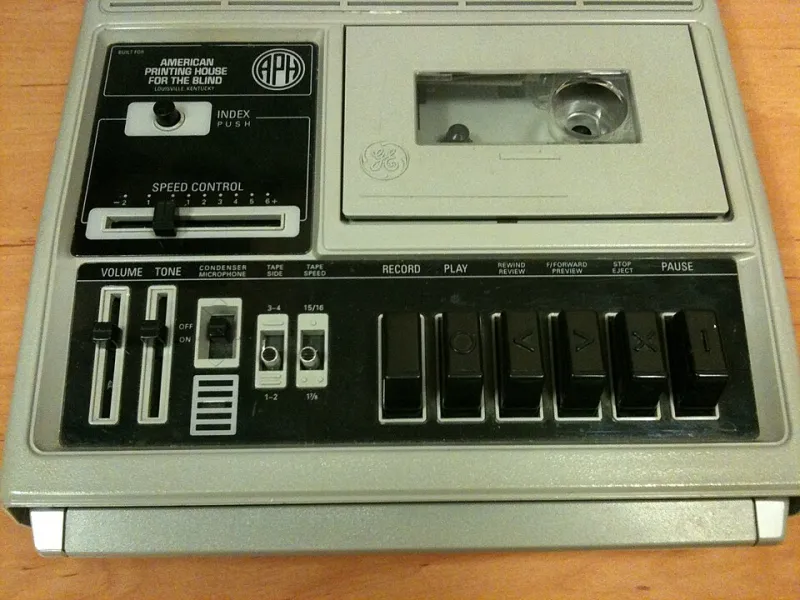
Photo: Eddau, CC0, via Wikimedia Commons
Here's a scenario that plays out every storm season in America: a hurricane is turning toward the coast, and a county emergency management office pushes out an evacuation order. It appears as a bright red banner crawling across the bottom of local TV. It's posted as a graphic on the county's Facebook page. It flashes on the screen of every smartphone in the area.
And for thousands of blind and low-vision residents, it says almost nothing at all.
The banner isn't read aloud by the TV. The Facebook graphic has no alt text. The phone alert buzzes, but the accompanying map — the one showing which evacuation zone you're in — is just an image. If you can't see the screen, you might learn about the order hours later, from a neighbor knocking on your door. If you're lucky.
We don't talk about this enough: emergency communication in the United States is still designed, first and foremost, for people who can see it. In an era of intensifying hurricanes, wildfires, and tornado outbreaks, that's not an inconvenience. It's a life-or-death accessibility failure.
The Quiet Chaos of a Visual Alert
Start with the systems most of us take for granted. The Emergency Alert System and Wireless Emergency Alerts do deliver audio — a harsh attention tone, followed by a text-to-speech message. That's progress. But the quality is inconsistent. Synthetic voices garble street names and zone designations. Alerts get truncated. And the critical visual details — evacuation zone maps, shelter addresses displayed as images, color-coded risk graphics — often never make the jump to audio at all.
Local news is worse. Meteorologists point at radar maps and say things like "this band right here" and "as you can see." County websites post PDFs that screen readers can't parse. Social media — now a primary emergency channel for many agencies — is a graveyard of inaccessible graphics and screenshots of press releases.
"The information exists," as one advocate put it to us. "It just exists somewhere I can't reach it."
Radio Readers and the Human Workaround
So how do blind Americans actually stay informed? Often through improvised, underfunded networks that have been holding this system together for decades.
There are the radio reading services — nonprofit stations where volunteers read newspapers, grocery ads, and yes, weather reports aloud, around the clock. Outlets like the International Association of Audio Information Services coordinate these lifelines across the country, and during major storms, they become essential. But many run on shoestring budgets and aging volunteer bases.
There's the National Weather Service radio network, which broadcasts continuous forecasts — genuinely useful, though its emergency-specific detail varies by region.
And increasingly, there's technology. Screen readers like VoiceOver and TalkBack can read accessible weather apps aloud. AI-powered apps now describe images, transcribe live TV, and read documents on the fly. Some blind users rely on community members, family group chats, or neighbors — the same informal networks that have always filled institutional gaps.
The through-line is uncomfortable: the most reliable accessibility in American emergency communication is often built by volunteers and hobbyists, not by the government agencies legally responsible for reaching everyone.
What Accessible Emergency Communication Should Look Like
This isn't a mystery. Disability advocates and accessibility researchers have laid out the blueprint for years, and none of it is science fiction:
- Text alternatives for every graphic. Every evacuation map, radar image, and shelter flyer needs complete alt text or an audio-described version — before the storm, not after a complaint.
- Accessible-by-default alerts. Emergency alerts should include full spoken detail: street boundaries, zone names, shelter addresses. Not "see our website."
- Accessible websites and social media. Emergency management offices should treat screen reader compatibility as mission-critical infrastructure, the same way they treat backup generators.
- Multiple redundant channels. Radio, phone trees, nonvisual formats like Braille and large print for printed notices, and partnerships with radio reading services and organizations like the National Federation of the Blind.
- Blind people in the planning room. Emergency exercises should include blind and low-vision participants reviewing the actual alerts, not checking a compliance box afterward.
The legal scaffolding already exists. The Americans with Disabilities Act and Section 508 of the Rehabilitation Act require accessible communication from public entities. Enforcement, as usual, lags far behind the letter of the law.
Why This Is Everyone's Problem
It's tempting to file this under "accessibility issue," a niche concern. But think about who else is failed by visual-only alerts: older adults with age-related vision loss — a population that grows every year — anyone whose hands are full, anyone in a loud environment, anyone whose screen is dead because the power's out. Accessible alerts are simply better alerts. The curb cut effect applies to emergency information, too.
And the stakes are rising. Climate change is making the alerts more frequent. More Americans than ever live with some degree of vision loss. The gap between how emergencies are communicated and how everyone actually receives them is widening at exactly the wrong moment.
See the Whole Picture
At The Blind Project, we believe you can't understand the world until you've heard every version of it. Right now, a huge portion of America's emergency information simply doesn't exist in a version blind people can hear — and that's a policy choice, even if nobody's admitting it.
The fix isn't expensive. It's a matter of treating blind residents as the first-class citizens we are: included in the planning, considered in the design, and never left to learn about an evacuation order from a knock on the door.
The next storm is coming. The question is whether the warning will reach everyone — or only the people who can see it.